Peace Love and Hearts: A Designer’s Practical Review
As a designer who spends half my life staring at stitch maps and the other half troubleshooting tension issues, I approach every new machine embroidery design with a healthy dose of skepticism. We have all been there: you download a cute graphic, load it onto your machine, and watch in horror as the thread nests into a bird’s nest of regret. That is why when I pulled up Peace Love and Hearts, I wasn’t just looking for cuteness. I was looking for structural integrity, stitch logic, and commercial viability.
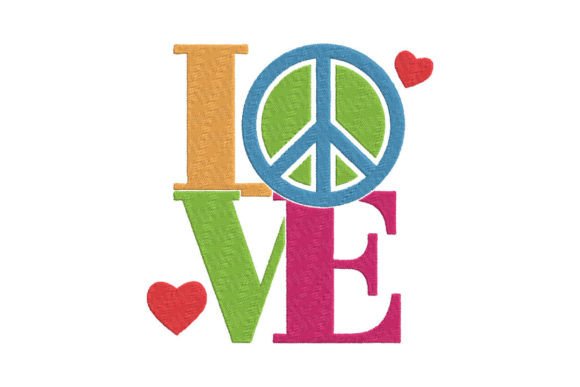
This design lands squarely in the Valentine S Day category, but its utility extends far beyond February 14th. The motif combines three universal symbols—the peace sign, the word "love," and heart shapes—into a cohesive unit. From a visual standpoint, it exudes a retro-modern vibe that feels less like a cliché holiday greeting and more like a lifestyle statement. But does it hold up under the needle? Let’s break down how this embroidery file performs in real-world applications, from custom apparel to small shop merchandise.
First Impressions: Mood and Layout
The immediate appeal of Peace Love and Hearts is its balanced composition. Many designers struggle to combine text and icons without creating visual clutter. Here, the layout feels intentional. The elements are spaced to allow the fabric to breathe, which is crucial for maintaining a professional look. If you are an Etsy seller or a craft business owner, you know that "breathing room" translates directly to perceived quality. A cramped design looks cheap; a well-spaced design looks boutique.
The mood is undeniably positive. It captures that specific intersection of hippie nostalgia and modern minimalism. This makes it versatile. It isn’t just for romantic partners; it works for friendship bracelets, self-care kits, and inclusive community events. When I visualize this stitched out, I don’t see a generic valentine. I see a brand asset for a shop that sells organic cotton tees or reusable tote bags. It signals values, not just affection.
Real-World Application: The Tote Bag Test
To truly evaluate an embroidery project, you have to imagine it on a difficult surface. Let’s say you are preparing a custom embroidered tote bag. Canvas is thick, textured, and unforgiving. If a design has too much stitch density, the fabric will pucker, and the bag will lose its shape. If the density is too low, the canvas texture shows through the threads, making the design look sparse.
Peace Love and Hearts appears to strike a good balance here. The use of what looks like a combination of fill stitch for the hearts and potentially satin stitch or running stitch for the outlines suggests a thoughtful approach to coverage. On a heavy cotton tote, this design would sit flat without pulling the weave apart. For a small shop product, this reliability is gold. You don’t want to spend twenty minutes hooping a bag only to have the design distort after the first wash.
Consider also its use on sweatshirts. Sweatshirt embroidery requires careful handling of stretchy, fuzzy fabrics. A design with excessive density can create a hard, cardboard-like patch on a soft fleece hoodie. Based on the visual weight of Peace Love and Hearts, it seems light enough to maintain the drape of a garment while still providing enough coverage to pop against the fabric texture. This makes it an excellent choice for custom apparel lines where comfort is as important as aesthetics.
Technical Considerations and Fabric Choices
While the design is versatile, it is not magic. You must respect the mechanics of embroidery. Here is where my experience as a reviewer comes in handy. There are specific scenarios where you need to proceed with caution.
- Thin or Stretchy Fabrics: If you are stitching this on a lightweight rayon tee or a stretchy jersey, standard stabilizer won’t cut it. You will need a cut-away stabilizer to prevent the design from warping over time. The interplay between the peace symbol’s curves and the fabric’s grain needs support.
- Dark Fabrics: Thread color contrast is critical. If you are stitching white thread on black fabric, any gaps in the fill stitch will show the background. Always test your tension. If the design relies on tight satin columns, ensure your machine is calibrated to prevent gaps.
- Small Hoop Sizes: If you are scaling this down for a baby embroidery project, such as a onesie or a burp cloth, check the detail level. Tiny lettering and intricate corners can become muddy if the design is reduced too much. Always stitch a test on scrap fabric first.
- Curved Surfaces: Embroidering on caps or curved backpack panels requires precise hooping. The symmetrical nature of Peace Love and Hearts helps here, as asymmetry is harder to align on curved surfaces. However, ensure your stabilizer is robust enough to handle the curvature without shifting.
Commercial Viability and Brand Consistency
For digital product sellers and commercial embroidery professionals, the question is always: "Will this sell?" The answer lies in the trend cycle. Retro and boho styles have staying power. They are not fleeting trends; they are aesthetic staples. By incorporating Peace Love and Hearts into your design assets, you are tapping into a evergreen market.
This design enhances visual appeal because it is recognizable at a distance. In a craft fair setting, customers scan tables quickly. A clear, bold motif catches the eye faster than a complex, overly detailed scene. Furthermore, using consistent design elements across your product line—say, putting this same motif on aprons, pillow covers, and tea towels—builds brand recognition. It tells the customer that you have a cohesive style.
When creating printable mockups for your online store, this design photographs well. The distinct shapes create nice shadows and highlights, giving depth to your digital images. This increases buyer engagement and trust, as the product looks tangible and high-quality even before purchase.
Practical Designer Notes
Before you commit to a large production run or list this as a new item in your shop, follow these practical steps:
- Check the License: The product description mentions it is a machine embroidery design, but always confirm the licensing terms. Can you use it for commercial finished products? Can you resell the digital file? Never assume. Protect your business.
- Test Stitch Density: Load the file into your embroidery software. Look at the stitch count. If it seems excessively high for the size, consider reducing the density slightly to save thread and reduce puckering.
- Color Theory: Don’t just default to red and pink. Try earth tones for a boho look, or pastels for a nursery vibe. The design’s structure supports various thread color combinations.
- Inspect Small Details: Zoom in on the connection points between the peace sign and the hearts. Are there jump stitches that need trimming? Plan your finishing process accordingly.
- Wash Testing: Stitch a sample, wash it, and dry it. Check for thread breakage or fabric distortion. Your reputation depends on the longevity of the finished product.
Final Verdict
Peace Love and Hearts is a solid addition to any designer’s library. It avoids the trap of being overly seasonal by focusing on universal themes of positivity and connection. Whether you are creating a personalized gift for a friend, stocking your Etsy shop with spring inventory, or producing bulk orders for a local boutique, this design offers the flexibility and professional finish required for serious craft businesses.
It is not just about adding good vibes to your fabrics; it is about adding value to your brand. With proper stabilizer selection, attention to thread contrast, and careful hooping, this digital embroidery file can become a staple in your portfolio. Just remember: the design is only as good as the execution. Treat it with the technical respect it deserves, and it will deliver results that keep your customers coming back.