Reviewing Happy Merry Christmas House for Business
As an embroidery designer who has spent years digitizing and testing files for commercial use, I approach every new machine embroidery design with a critical eye. It is not just about whether a motif looks cute on a screen; it is about how it performs on fabric, how it holds up in the wash, and most importantly, how it serves the brand identity of the small business owner using it. Today, I am reviewing Happy Merry Christmas House, a festive digital asset that promises to add personality to fabric and bring a sense of peace to the holiday season. For boutique owners, café managers, and Etsy sellers, this review focuses on the practical application of this design in real-world merchandising scenarios.
First Impressions: Visual Personality and Brand Fit
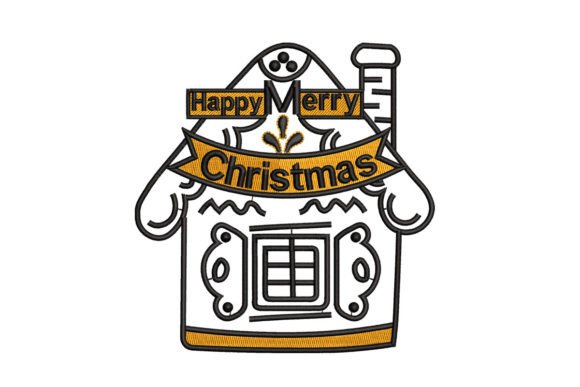
The title Happy Merry Christmas House suggests a design that is welcoming, nostalgic, and rooted in tradition. In the context of branded merchandise, this aesthetic is powerful. It does not scream for attention with aggressive modernism; instead, it invites warmth. For a handmade brand or a local bakery, this visual language aligns perfectly with values of comfort, home, and community. When I evaluate a design for client use, I look for versatility. Does it feel premium? Is it playful yet professional? Based on the description, this piece aims to be a "quick and easy" addition, which often implies clean lines and manageable stitch paths, avoiding unnecessary complexity that can lead to production errors.
For businesses selling handmade product lines, the perceived value of the embroidery is crucial. A design that looks cluttered or amateurish can detract from the quality of the garment. However, a well-balanced house motif can serve as a charming anchor for holiday collections. It feels decorative but grounded, making it suitable for both rustic and classic brand identities. The key is ensuring that the "personality" mentioned in the product description translates into clear, crisp stitching on various textiles.
Real-World Applications for Small Business Merch
Let us move beyond theory and discuss where Happy Merry Christmas House actually works in a commercial setting. Small business owners are constantly looking for ways to differentiate their small business merch during the high-volume holiday quarter. Here is how I envision this design performing across different product categories:
- Staff Uniforms and Aprons: For cafés and bakeries, apron embroidery is a staple. Placing this design on the chest pocket area of a canvas or denim apron creates an immediate festive atmosphere without overwhelming the staff member. It acts as a subtle nod to the season, enhancing customer experience through visual cues of warmth and hospitality.
- Embroidered Patches: One of the most versatile uses for a contained motif like a house is creating iron-on or sew-on patches. An embroidered patch allows customers to customize their own jackets or bags later, adding value to your custom apparel offerings. Patches also solve inventory issues, as you can produce them in bulk and apply them to different garments as needed.
- Tote Bags and Gift With Purchase: A simple cotton tote bag featuring this design makes an excellent promotional item. Tote bag design requires bold, recognizable imagery, and a house silhouette typically offers good visibility. Offering these as gifts with purchase over a certain amount can drive sales while spreading brand awareness.
- Caps and Headwear: Cap embroidery is tricky due to the curved surface and limited space. If the design is compact, it could work beautifully on the side panel or even the front of a dad hat, provided the stitch count is optimized for the smaller hoop area.
Technical Considerations and Production Risks
While the aesthetic appeal is strong, any experienced embroiderer knows that technical execution is where profits are made or lost. Before running a large batch of commercial embroidery, you must address several physical constraints. The product description notes that this is a creative design for clothing and home use, but it does not specify exact technical parameters. Therefore, due diligence is required.
First, consider stitch density. Holiday designs sometimes incorporate heavy fills to create a cozy, textured look. However, high density on lightweight fabrics like t-shirts can cause puckering. You must test the embroidery file on the exact fabric weight you intend to use. If the design is dense, you will need a robust cut-away stabilizer to support the stitches. Conversely, if the design is too sparse, it may look cheap on thick materials like fleece or canvas.
Second, evaluate the scale. Small details do not translate well to small patches. If you plan to use this as a left-chest logo on a work shirt, ensure the outlines are thick enough to hold together after washing. Tiny lettering or intricate roof tiles might merge into a blob if scaled down too far. Always create a printable mockup at actual size to check legibility before hooping the first sample.
Third, think about thread colors and contrast. A house design often relies on contrast between the structure and the background. On dark uniforms, you will need bright, high-visibility threads. On light tote bags, subtle tones might get lost. Test your colorways physically, as screen colors rarely match thread sheen accurately.
Enhancing Brand Identity and Customer Trust
Why does this matter for your bottom line? Because consistent, high-quality embroidery builds trust. When a customer receives a finished product with clean, professional stitching, they perceive the brand as reliable and premium. Using a cohesive design like Happy Merry Christmas House across your design assets—from employee uniforms to packaging accents—creates visual consistency. This recognition factor is vital for local businesses competing against big-box retailers.
Moreover, holiday-specific items create urgency and emotional connection. A customer is more likely to buy a mug warmer or a kitchen towel with this embroidery if it evokes the feeling of a peaceful Christmas home. It transforms a generic item into a keepsake. For Etsy sellers, this emotional hook can significantly boost conversion rates during the fourth quarter.
Practical Designer Notes for Implementation
To ensure success with this design, follow these steps before full production:
- Check Licensing: Confirm that the digital embroidery file comes with a commercial license. Never assume; always read the terms to avoid legal issues when selling finished goods.
- Test Hoop Size: Determine the minimum hoop size required. Ensure your machines can accommodate the design dimensions without re-hooping, which introduces alignment errors.
- Fabric Texture Matters: Test on toweling, denim, and jersey. Fabric texture affects how stitches sit. A design that looks great on smooth cotton might sink into a fluffy towel.
- Black and White Test: Print or stitch the design in monochrome first. This reveals structural flaws and spacing issues that color might hide.
- Client Approval: If working with B2B clients, provide a physical sample or a high-resolution photo of the stitched result, not just a digital render.
In conclusion, Happy Merry Christmas House offers significant potential for small businesses looking to enhance their holiday offerings. It bridges the gap between decorative charm and professional branding. By paying attention to technical details like stabilizer choice, stitch density, and fabric compatibility, you can leverage this design to create high-value merchandise that resonates with customers. Remember, the goal is not just to embroider a image, but to craft a tangible representation of your brand’s warmth and quality. Always verify the specific file details such as format and exact stitch count from the provider, as these variables will dictate your production workflow. With careful testing and strategic placement, this design can become a staple in your seasonal catalog.