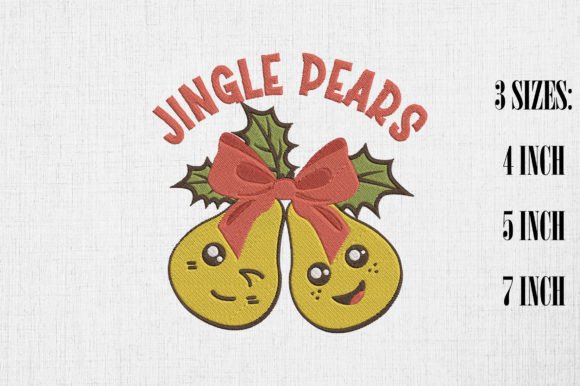
Jingle Pears Happy Christmas Design Review
As an embroidery designer who has spent years digitizing and reviewing machine embroidery designs for commercial use, I approach every new file with a critical eye. It is not just about whether a design looks cute on a screen; it is about how it performs in the real world of small business merchandise. Today, I am taking a close look at Jingle Pears Happy Christmas. This digital embroidery file promises to bring a festive touch to various applications, but does it hold up under the scrutiny of professional production standards? Let us dive into the details.
First Impressions: Visual Personality and Brand Fit
The first thing that strikes me about Jingle Pears Happy Christmas is its playful yet polished aesthetic. The title suggests a whimsical twist on traditional holiday motifs, swapping the expected bells or holly for pears. This immediately signals a brand personality that is friendly, approachable, and slightly rustic. For small business owners, especially those in the handmade product sector, this visual tone is invaluable. It feels less like corporate holiday marketing and more like a warm invitation from a local boutique or a cozy café.
The design appears to balance decorative elements with clarity. In the world of embroidery, simplicity often translates to professionalism. A design that is too cluttered can look messy when stitched out, especially on textured fabrics. Jingle Pears Happy Christmas seems to prioritize clean lines and recognizable shapes, which is crucial for maintaining brand identity across different mediums. Whether you are aiming for a premium look or a charming, homemade vibe, this design offers a versatile foundation.
Real-World Applications for Small Business Merch
When evaluating a machine embroidery design for commercial embroidery projects, I always ask: where can this actually live on a product? The description notes that it will beautifully complement t-shirts, dresses, scarves, and home decor. However, for the serious merch creator, we need to think bigger. Here is how I envision Jingle Pears Happy Christmas performing in various business scenarios:
- Embroidered Patches: This is perhaps the most lucrative application. An embroidered patch featuring this design could be sold as a standalone item or used as a branded add-on for orders. Patches allow customers to customize their own gear, increasing engagement with your brand.
- Staff Uniforms and Apron Embroidery: For bakeries, florists, or coffee shops, staff apparel is a walking billboard. Placing this design on the chest of an apron or work shirt adds a seasonal touch without overwhelming the uniform. It signals attention to detail and care.
- Cap Embroidery: Holiday caps are huge sellers. If the design scales down well, it could sit perfectly on the front panel of a dad hat or beanie. However, curved surfaces require careful digitizing to prevent distortion.
- Tote Bag Design: Canvas tote bags are staples for retail businesses. A centered or corner placement of Jingle Pears Happy Christmas can turn a simple bag into a desirable holiday gift item.
- Customer Gifts and Packaging Accents: Small-scale versions of this design could be stitched onto tissue paper bands, gift tags, or small linen pouches, elevating the unboxing experience.
Technical Considerations and Production Challenges
While the aesthetic appeal is strong, technical execution is where many designs fail. As a designer, I must advise caution in specific areas. The success of Jingle Pears Happy Christmas depends heavily on stitch density and thread colors. High stitch density can cause fabric puckering, especially on lightweight materials like silk scarves or thin t-shirts. Conversely, low density might leave gaps in the coverage, looking unfinished.
One major concern is small patch sizes. If you intend to use this as a tiny logo accent, you must verify that the details do not merge together. Tiny lettering or intricate outlines can become illegible if the hoop size is too small or if the needle jumps are not optimized. Additionally, when working with dark uniforms, you must consider thread color contrast. A light-colored pear design on a navy apron will pop, but ensure the digitizing includes proper underlay stitches to prevent the background fabric from showing through.
Fabric texture also plays a role. On rougher materials like canvas or denim, the design needs robust stitching to stand out. On smooth fabrics like polyester blends, you might need a cut-away stabilizer to maintain shape after washing. Always test on real fabric before committing to a large production run.
Impact on Brand Identity and Customer Trust
Consistency is key to building brand identity. Using a cohesive design like Jingle Pears Happy Christmas across your custom apparel, packaging, and social media printable mockup assets creates a unified visual language. When customers see the same high-quality embroidery on your tote bags, hats, and staff uniforms, it builds trust. It signals that you are a professional operation that values quality.
Furthermore, handmade products carry an emotional weight. A well-executed embroidery piece feels personal and valuable. It distinguishes your finished product from mass-produced imports. For Etsy sellers and craft businesses, this perceived value can justify higher price points and foster deeper customer loyalty. The design becomes not just a decoration, but a symbol of your brand’s commitment to craftsmanship.
Practical Designer Notes for Best Results
Before you purchase and produce, here are my top recommendations for getting the best results with this file:
- Test in Black and White First: Convert your preview to grayscale to check for contrast and clarity. If the design loses definition without color, it may need adjustments.
- Check Scalability: Verify if the design works at the smallest size you intend to use. Zoom in to inspect spacing between elements.
- Review Thread Color Contrast: Choose thread colors that complement your base fabric. Use a color chart to predict the final look.
- Confirm Hoop Size: Ensure the design fits within your machine’s maximum hoop size, leaving room for stabilization.
- Use Proper Stabilizer: Match the stabilizer to the fabric weight. Tear-away for stable woven fabrics, cut-away for knits and stretchy materials.
- Create a Printable Mockup: Before stitching, place the design on a digital photo of your product. This helps visualize placement and proportion.
- Verify Commercial Licensing: Always read the license terms included with the digital embroidery file. Confirm you have the right to use it for commercial embroidery and sales.
- Check File Formats: The description mentions multiple embroidery file formats. Ensure your specific machine software can read the provided files (such as PES, DST, or EXP) without conversion errors.
Final Verdict for Merch Creators
Jingle Pears Happy Christmas is a promising addition to any holiday design asset library. Its playful nature makes it ideal for brands wanting to convey warmth and joy. However, its success lies in the execution. By paying attention to stitch density, fabric choice, and placement, you can transform this digital file into a standout physical product. Whether you are creating branded patches, updating staff uniforms, or launching a new line of holiday home decor, this design offers the flexibility and charm needed to engage customers. Just remember to test thoroughly and respect the technical limits of your equipment. With careful planning, this embroidery design can significantly enhance your small business merch strategy this season.