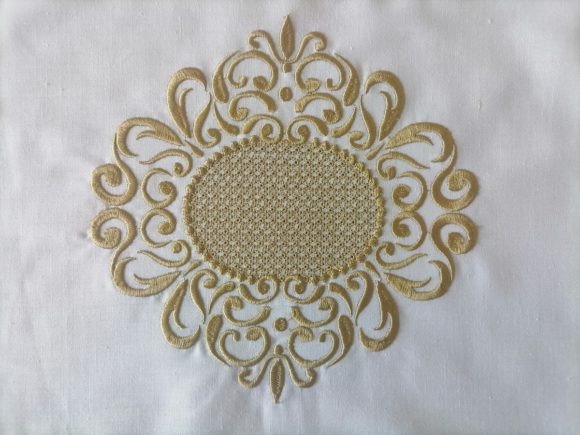
Monogram Damascus: A Designer’s Review for Craft Fairs
As an embroidery designer who has spent countless weekends behind a booth table, I know that not every machine embroidery design is created equal when it comes to retail success. Some designs look stunning on a screen but fail to capture attention in person. Others are so complex they take hours to stitch, eating into your profit margins. Today, I am putting Monogram Damascus under the microscope. This isn't just about aesthetics; it is about viability for the modern Etsy seller, boutique maker, and craft fair veteran.
The premise of this design is intriguing. It falls under the category of Intricate Cuts, a style that relies on negative space and structural integrity rather than just thread coverage. The description notes that the design is embroidered with a winged needle or a large numbered needle, requiring the removal of stabilizer in the ring to leave beautiful holes. This technique creates a lace-like, openwork effect that screams premium quality. But does it sell? Let’s break it down from the perspective of someone who needs to move inventory.
First Impressions: Elegance Meets Technique
When I first visualize Monogram Damascus, the immediate impression is one of refined elegance. It does not feel cute, funny, or rustic. Instead, it leans heavily into the sophisticated, decorative, and premium end of the spectrum. For a craft fair booth, this is a double-edged sword. It may not appeal to the impulse buyer looking for a quirky gift, but it will absolutely stop the customer who appreciates high-end handmade craftsmanship.
The "Damascus" name suggests a pattern inspired by steel or fabric folds, implying depth and texture. When combined with the monogram element, it becomes a personalized luxury item. In a sea of standard satin-stitch initials, this design stands out because of its structural complexity. It feels like something you would find in a high-end boutique rather than a discount bin. For brand consistency, if your shop focuses on heirloom-quality goods, this embroidery file is a perfect fit.
Product Suitability: Where Does It Shine?
Not every product is a good canvas for intricate cutwork. Based on the requirement to remove stabilizer to create holes, fabric choice is critical. Here is how I see Monogram Damascus performing across common craft fair products:
- Linen Tea Towels and Napkins: This is the ideal application. The natural weave of linen complements the open holes of the design. A tea towel embroidery piece with this monogram becomes an instant wedding or housewarming gift best-seller. The contrast between the crisp fabric and the delicate cutwork is visually striking.
- Tote Bags: A heavy canvas tote bag design can support the structure, but you must ensure the fabric is tight enough to hold the holes without fraying excessively over time. If executed well, it elevates a simple tote into a designer accessory.
- Aprons: For a chef’s apron or a gardening apron, this adds a touch of class. However, consider the placement. An apron embroidery design near the pocket or chest area works better than lower down, where it might get obscured by stains or wear.
- Pillow Covers: On home decor items, this design acts as a focal point. It transforms a plain pillow cover into a statement piece. The shadow play through the holes adds dimension that flat stitching lacks.
- Caps and Curved Surfaces: I would advise caution here. The description mentions removing stabilizer in the ring. On a curved cap surface, maintaining the tension required for clean holes is difficult. Unless you are highly experienced with cap framing, stick to flat fabrics to avoid distortion.
Production Realities and Practical Notes
Before you load this digital embroidery file onto your machine for a production run, we need to talk about the mechanics. The unique selling point of Monogram Damascus is the "beautiful holes" created by removing the stabilizer. This is not a set-it-and-forget-it process. It requires manual intervention during the stitching process or careful post-processing.
Stabilizer Strategy: You cannot use a standard tear-away if you need to remove it from inside a ring without damaging the surrounding stitches. A water-soluble stabilizer might be safer for the cut areas, or a very lightweight cut-away that can be carefully trimmed. Test this extensively. If the holes look ragged, the design loses its premium appeal.
Fabric Texture and Density: The stitch density must be balanced. If the surrounding stitches are too dense, they may pucker the fabric around the open holes. If they are too light, the structure may collapse. Thick fabrics like denim or heavy canvas may not show the delicacy of the cutwork, while very thin silks might fray. Medium-weight cottons, linens, and twills are your safest bets.
Thread Colors: Because this design relies on shape and negative space, thread color contrast is vital. A monochromatic look (white on white) is elegant but requires perfect lighting to be appreciated in a booth. High-contrast colors will make the design pop in photos and from a distance. Consider offering a range of thread colors to match seasonal trends.
Visual Appeal and Customer Engagement
In a busy craft fair environment, you have seconds to catch a eye. Monogram Damascus works because it invites closer inspection. A customer might see the monogram from afar, but they have to step up to see the intricate cutwork. This engagement is gold. It starts a conversation. You can explain the technique, the care involved, and the uniqueness of the finished product.
For online listings, this design photographs beautifully if lit correctly. The shadows cast by the holes add depth to flat-lay photos. Use a printable mockup to show potential buyers how it looks on different items before you stitch them all. This saves time and helps you curate your design assets for maximum impact.
Commercial Viability for Small Shops
Is this design repeatable for batch production? Yes, but with caveats. The need to manage the stabilizer removal means each unit takes slightly longer than a standard fill-stitch design. You must factor this labor time into your pricing. However, the perceived value is higher. Customers are willing to pay more for what looks like handmade lace or complex cutwork.
For commercial embroidery purposes, ensure you have the correct license. Most designers offer different tiers for personal versus commercial use. Since you are selling these as small shop products, verify your rights to sell finished goods made with this embroidery file.
Designer’s Checklist for Success
- Test on Scrap Fabric: Never skip this. Try the design on the exact fabric you plan to sell. Check for fraying around the holes.
- Check Hoop Size: Ensure the design fits your standard hoops to minimize re-hooping time during production runs.
- Inspect Stitch Density: Zoom in on your software. Are there enough tie-offs to secure the open areas?
- Create Real Mockups: Photograph one perfect sample on a tote, a towel, and a pillow. Use these for all your marketing.
- Compare Fabric Colors: See how the design reads on dark versus light fabrics. Dark fabrics may hide the intricacy of the holes unless you use contrasting thread.
In conclusion, Monogram Damascus is a strong contender for the artisan market. It is not a quick-fill design for mass-produced cheap goods. It is a thoughtful, intricate piece that rewards quality materials and careful execution. For the handmade product seller who values reputation and aesthetic excellence, this design offers a way to differentiate your booth from the competition. It turns a simple monogram into a conversation piece, and in the world of craft fairs, conversation leads to sales.